Header image credit: me // Featured image credit: Michelangelo (public domain, via Wikimedia Commons)
What makes humans special?
Humans have probably been asking that question for probably as long as we’ve existed. For much of that time, I imagine that question focused on a particular variation: what separates us from the animals? Language, consciousness, problem-solving, and tool use are some of the more convincing answers, but not convincing enough. We needn’t look far into the animal kingdom to find sophisticated communication, self-awareness, clever solutions to problems, and the shaping and use of tools.
In recent decades, the arguably more pressing variation of the question is a technology-focused one: what separates us from the machines? Or, phrased differently, what makes human intelligence different from artificial intelligence? I’ll address the first question in this post, but you’ll have to wait for part two to hear my rant about—I mean my answer to the second.
To know what sets humans apart, we need to go back to the beginning. Genesis 1. God physically set Adam apart from the animals by creating him, but not the animals, in His image (vv. 26–27). It is this imago Dei (“image of God”), as it’s referred to in theology, that sets us apart from the rest of creation. But being created in God’s image might mean more than you think it means. There’s certainly more to it than I was initially taught.
Image Bearers
The Apostle John writes that “No one has ever seen God” (1:18). The Apostle Paul similarly tells the Colossians that Jesus “is the image of the invisible God” (Colossians 1:15). Given that we humans are visible, our being made in an invisible God’s image cannot refer to our physical, visible bodies, so it must be something intangible.
Jesus helps us to get closer to an answer with the words that he speaks to the woman at the well: “God is spirit” (John 4:24). It must be our spiritual natures that bear His image. And yet this answer is found lacking when we dig into the semantics. The Biblical Hebrew and Greek words translated as “spirit”—ruach and pneuma, respectively—can also mean “breath” or “wind.” Scripture refers to even animals as having such a “breath [ruach] of life” (Genesis 7:15) in them, so having a spirit—or a soul, if you prefer, as the words for “spirit” and “soul” are somewhat overlapping in their meanings and translations—is not enough to separate us from the animals.
However, Scripture does highlight three things—three different tasks—that separate us humans from the rest of creation.
Relate
The first task is relationship. Relationship is inherent to the nature of the triune God. With three Persons living as one Entity, relationship is built in. And that’s why God speaks in the first-person plural when creating man: “Let us make man in our image” (Genesis 1:26; emphasis added). (And to nerd out even more over the language here, that verse begins, “God said”, with “God” being plural and “said” being singular. So the plural God spoke as a single entity. And the same is true for the iconic opening line of Genesis: “In the beginning God [plural] created [singular] the heavens and the earth.” The doctrine of the Trinity is right there in the opening verse.) It is in this relational image that man is created. What makes humans special, then, is our ability for relationships, first and foremost of which is a relationship with the loving Creator of the universe Who desperately wants to be in relationship with us, so much so that the Father, the First Person of the Trinity, sent His Son Jesus, the Second Person of the Trinity, to die in our place to make a way for us to come back to Him.
But God also wants us to be in relationship with one another, hence why He says, “It is not good that the man should be alone” (Genesis 2:18). We need meaningful companionship. And as wonderful as pets can be, and as much as animals can have meaningful bonds with us and with each other, it’s not the same as human relationships. Human relationships are unique in the degree to which we can connect, in how we can help bear on another’s burdens and share in their joys, and in how we can encourage one another along life’s path. We need other image bearers.
The importance of this relational task is evident in that one of the most prominently repeated commands in Scripture is that we love God and love others.
And he said to him, “You shall love the Lord your God with all your heart and with all your soul and with all your mind. This is the great and first commandment. And a second is like it: You shall love your neighbor as yourself. On these two commandments depend all the Law and the Prophets.”
Matthew 22:37–40
An image bearer is, therefore, one who relates well to God and others.
Steward
The second task is dominion. After creating the plants and animals, God tasks mankind to “have dominion over the fish of the sea and over the birds of the heavens and over every living thing that moves on the earth” (Genesis 1:28). Yes, this means that humans are superior to the rest of creation, but, like any good ruler, this doesn’t mean we can wantonly exert that authority however we feel. There is an implication that we must steward well those things in our dominion. So, yes, we can farm and gather and hunt, but we must do so responsibly and not needlessly; we must act to preserve the natural world around us.
But what is left implied here is made explicit in Jesus’s teaching. He used both parables and direct statements to condemn those who abuse power and to teach that true leadership is based in service:
You know that the rulers of the Gentiles lord it over them, and their great ones exercise authority over them. It shall not be so among you. But whoever would be great among you must be your servant, and whoever would be first among you must be your slave, even as the Son of Man came not to be served but to serve, and to give his life as a ransom for many.
Matthew 20:25–28
Yes, we might have been given authority, but we are not to make a show of exercising it, just as God, the ultimate Authority, did not exercise His authority, but laid it down in service, giving “his life as a ransom for many.”
An image bearer is, therefore, meant to have dominion and serve those under their dominion.
Co-Create
The third task is co-creation. And to give credit where credit is due, I learned this fairly recently from a sermon (I believe from Bridgetown Church); I doubt I would have ever come to this conclusion on my own. Gensis 2 recounts how God put Adam in the Garden “to work it and keep it” (v. 15), which makes explicit the above implication that to “have dominion” means we must care for and protect. But there is another important implication to these words: we are to keep the work of creation going.
God made the world, but now he tasks us with keeping it going; He planted the garden, but it’s up to us to tend it, to make it bear fruit, to make it beautiful. In other words, it is our job to keep creating. God doesn’t intend for us to just sit in the garden and admire the beauty of what He did; He expects us to get in the mud ourselves and make our own beautiful things.
An image bearer is, therefore, one who joins God in the ongoing work of creating beautiful things in this world.
The Most Important Task
This command to work and keep the garden—to co-create with God—is the first implied command given in the Bible. (We don’t actually see God speak the command to Adam, but it’s implied that He thusly charged him.) Yes, it appears in the chapter after the command to be fruitful and multiply and have dominion, but within the story, it happens first: God gives the work-and-keep command to Adam before He has yet made Eve from Adam’s rib; the multiply-and-rule command is in the plural, meaning it is spoken to both Adam and Eve, and so can only come after God had created her. In terms of chronology, therefore, the work-and-keep command is our foremost command.
God does nothing by accident, so it is no small thing that He gives this task first. Moreover, God is a God of logic and reason, and reason would dictate that co-creation is our most important task, for it subsumes and necessitates the other two. While we could rule without creating anything and could be in relationship without taking appropriate charge over our dominions, we cannot create without both dominion and relationships: to create properly, we must have mastery over our creative domain and its necessary skills, knowledge, and instruments; and what we create would be largely pointless if we had no one to share it with or chose not to share it.
Think of how much lesser the world would be if Da Vinci had never unveiled The Mona Lisa or if Beethoven had never premiered his final symphony or if Jane Austen had never published Pride and Prejudice. The beautiful things we create in our God-given gardens are meant to be shared with others. When we do, in addition to inspiring awe and joy and wonder, these creations point to, reveal, and honor the Creator in us. They reveal that we bear His image: as God put the breath of life—a spirit—in us, so we are inspired (“in” + “spirit” = “inspired”) to breathe our spirits into the world and inspire other image bearers through what we create. And this is what makes the creative process so meaningful and worth sharing: we put some of ourselves—some of our imago Dei—into what we create.
To do the task of creation well, then, requires that we have dominion and be in relationship with other image bearers. So, while Jesus’ words to the disciples quoted above remind us that loving well is our greatest command, creation is our most important task, and perhaps one of our most valuable acts of love. After all, what better way to love our Creator and others than to join Him in the great work of tending the garden, of making the world a more beautiful place, of sharing the very breath of God through creative pursuits.
So let’s get out there and create beautiful things!
Time to Share
After all this talk about creation and the importance of sharing what we create, I would be remiss to not share some of my own creative pursuits and to encourage you all to do the same.
Feel free to skip over the text below and just look at the images; I won’t be offended. I do the same things with recipe blogs. But I do want to say this much first, since it will be relevant to part two of this post: the creative process can be lengthy and iterative. Sometimes an idea just comes, but other times it takes a lot of deliberating and brainstorming and thinking through logistics. It’s work. Tending a garden is messy, y’all. But, when it’s a hobby you enjoy and a creative work you’re made to do, it’s worth getting dirty in the muck and mire.
All right, here goes!
Across the years, music has been my most consistent and most enjoyed hobby and creative pursuit. From band and choir in high school and college to voice recitals to playing pit orchestras, most of this hobby has involved live performances and so is hard to share, aside from recital recordings that aren’t the greatest quality. But, I’ve also dabbled in the arranging side of composition, and that’s easier to share. I’ve arranged several mashups of two of my favorite genres: show tunes and classic rock. Of these mashups, “I Dreamed On” is probably my favorite. It sits well in my voice, I like the dark, minor take on “I Dreamed a Dream” (which really is a dark song, when you listen to the lyrics), and I love how I how I was able to get the two songs’ motifs to interweave more intricately as opposed to just going back and forth once or twice between the songs. (I’ve seen mashups like that; I would consider that more of a medley than a mashup.) And it’s the one that I have the best recording of, so I feel most comfortable sharing it, haha. You can see a few of my other mashups on YouTube, but that one’s the best, at least performance-wise.
In recent years, I’ve gotten back into crafting. I’d done some costume pieces and other minor projects throughout the years, but the last few years have seen my most ambitious projects and the ones I’m most proud of. Minnesota has a really good Renaissance festival, and I regularly go with friends who also get very into dressing up (we even do themed group costumes), so the biggest projects have been fantasy cosplay looks for that. Okay, one of the big ones (the elf one) will probably never see the festival; I don’t think it would handle that environment well, so I’m keeping that as an indoor costume. Speaking of, here is that elf costume, fully designed and made by me, except for the silver leaf collar/shawl that I attached the rest of the cape to. That was from a seller on Etsy and was a gift from my friend. (I also didn’t make the wig, ears, or circlet. And while I didn’t make the sandals, I did alter them.) This costume involved a long design and prep process. I never found a single image that quite captured the look I was going for, but I found enough inspiration images to get an idea of what I wanted, and I was able to refine that through some rough “photoshopping” (done in PowerPoint and Paint; it’s as cheap as it sounds, so I’ll spare you that). I also had a heck of a time finding one of the fabrics. But the construction processing was even more challenging, from the difficulty of hemming the cape (that was a two-person job, since I don’t have a mannequin) to figuring out how to rig the cape sleeves to be convertible (long and flowy vs. pulled in to the shoulders) to the tediousness of sewing on the bead applique (and trimming off the mesh that it came on!) to sewing leaf trim on sandal straps. But it was all worth it!
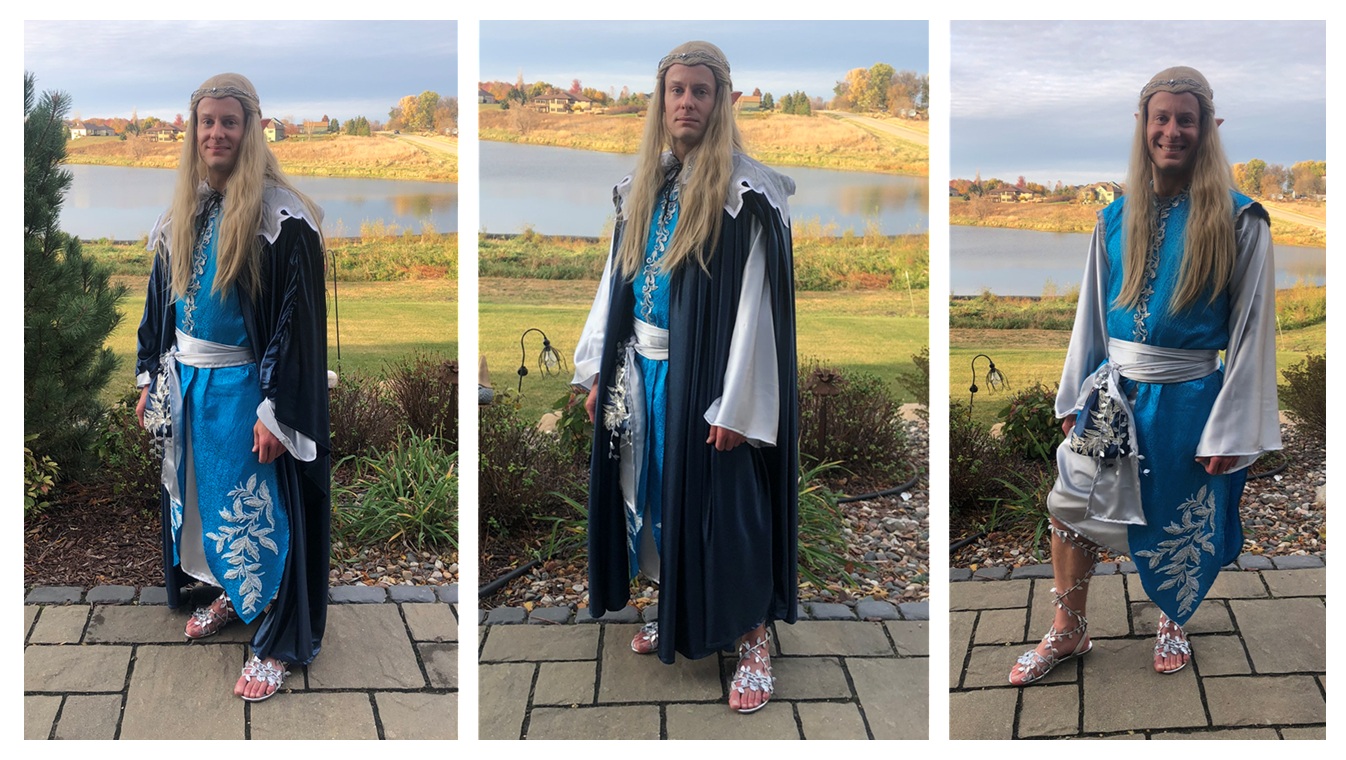
Image credit: me
The next big costume I finished was a phoenix-inspired one. It took a lot of discussion with my friend to finally settle one what we were going for (i.e., cryptid-inspired, rather than direct animal costumes, as if we were shapeshifters and this is how we look in our human form while still resembling the animal), but from there, the design came together quickly. But the costume did not! The base layers for the vest and cape were easy enough, but it took countless hours (and trust me, I’m kicking myself for not actually counting them better) to glue on the approximately 1800 feathers. And I don’t want to think about the brain cells I probably lost from the toxic glue fumes. Whoops! But, again, all so very worth it!
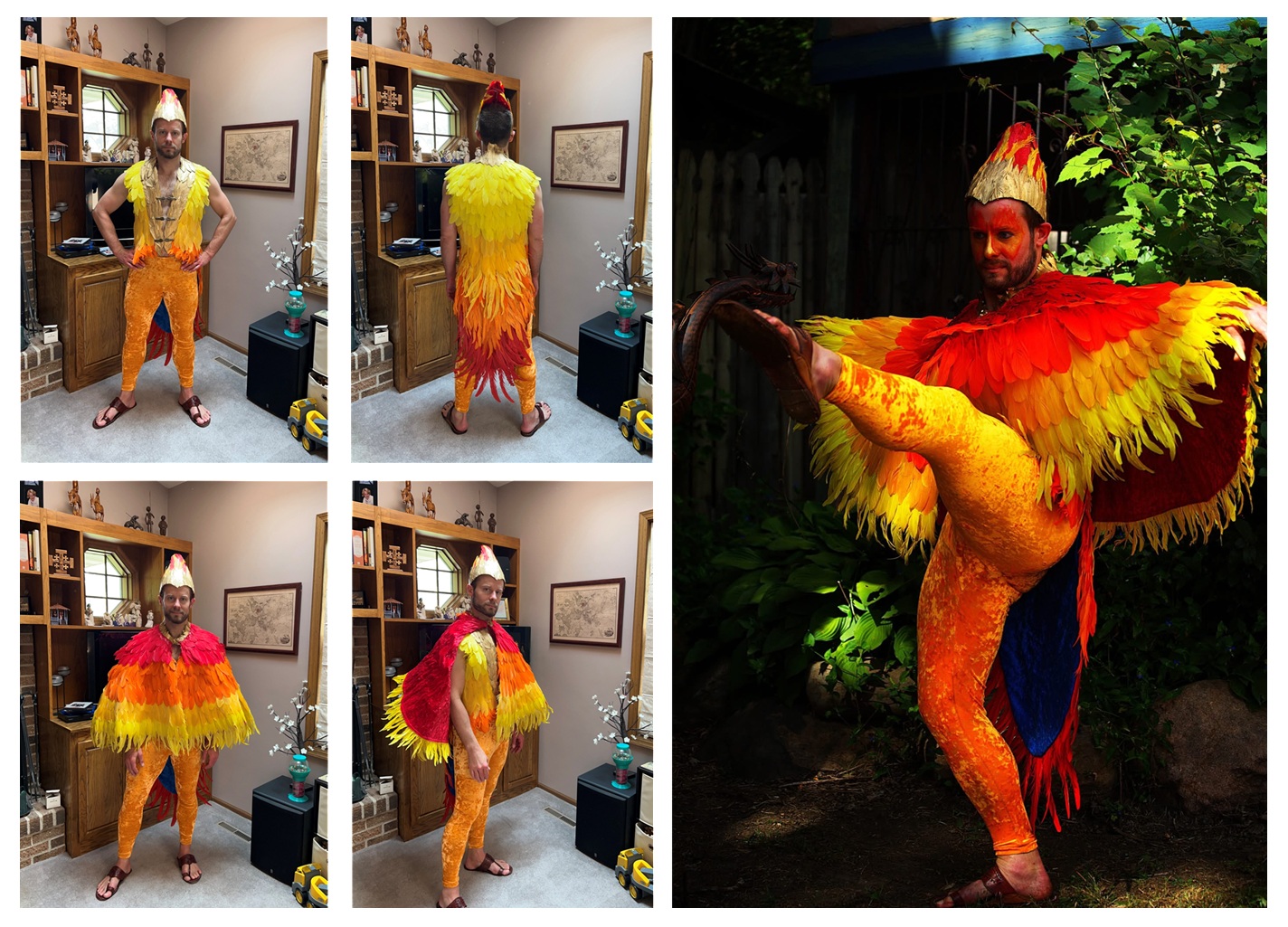
Image credit: me, for the four images on the left; Michael Turner (@ferryman.photography) for the large image on the right
This year’s costume is sort of a forest nymph. Like with the elf, there was a lot of image searching and rough “photoshopping” and brainstorming with my friend before I finally settled on the look. With so many different elements that I made, from the shirt to the leggings to the capes to the accessories, to treedazzling (bedazzling, but with foliage) so many of those elements, it probably took about as much time than the phoenix costume, but felt like less. And took way less glue, thankfully. Again, very worth it!
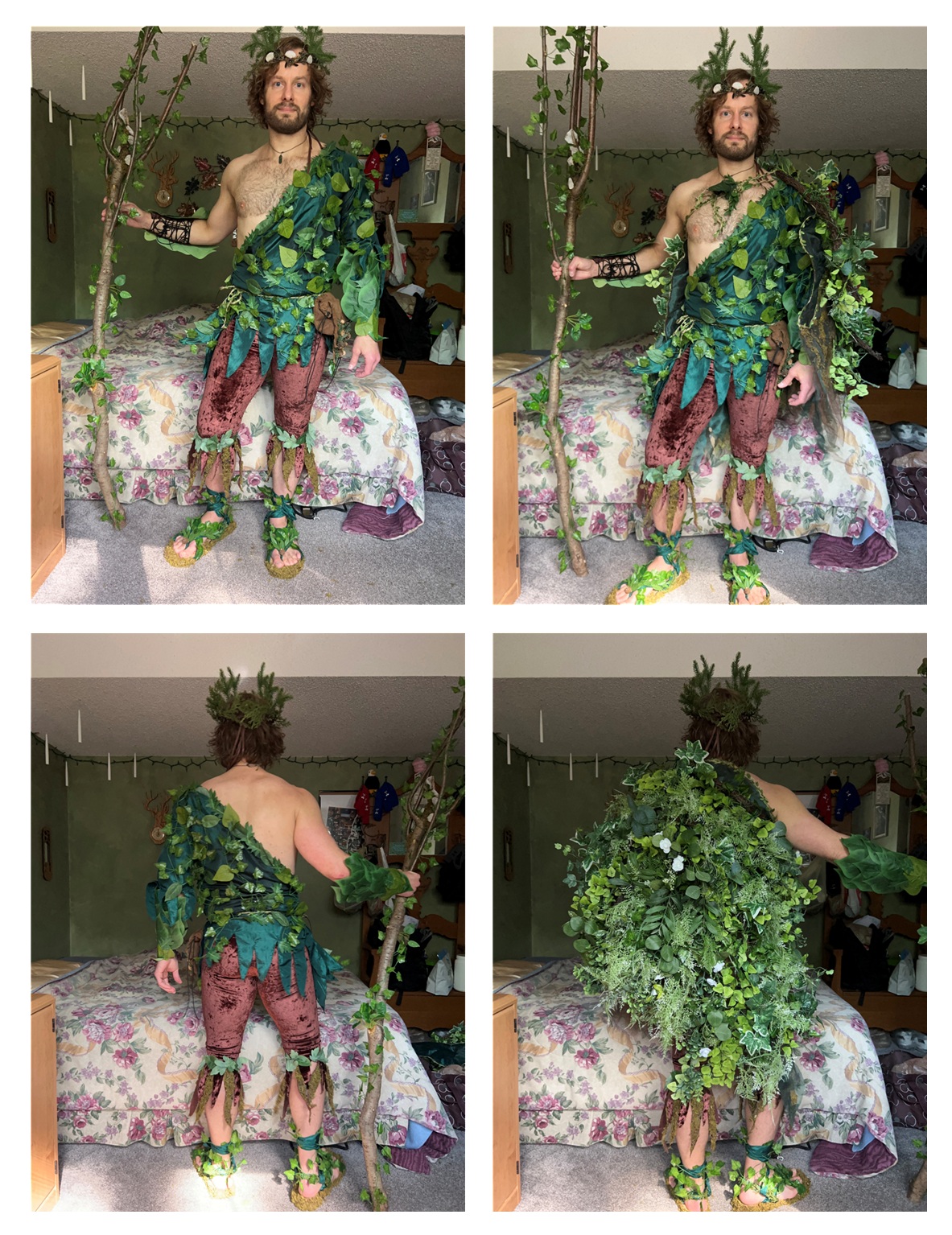
Image credit: me (all)
And because creating, like going to the Renaissance festival, is more fun when shared, I also made fairy wings for my niece and a cape for my nephew that can be let down or pulled up so that it can still fit him when he’s grown (floor-length when down, hip-length when up). I’m quite proud of that bit of engineering. So worth it to see how much joy it brought them!
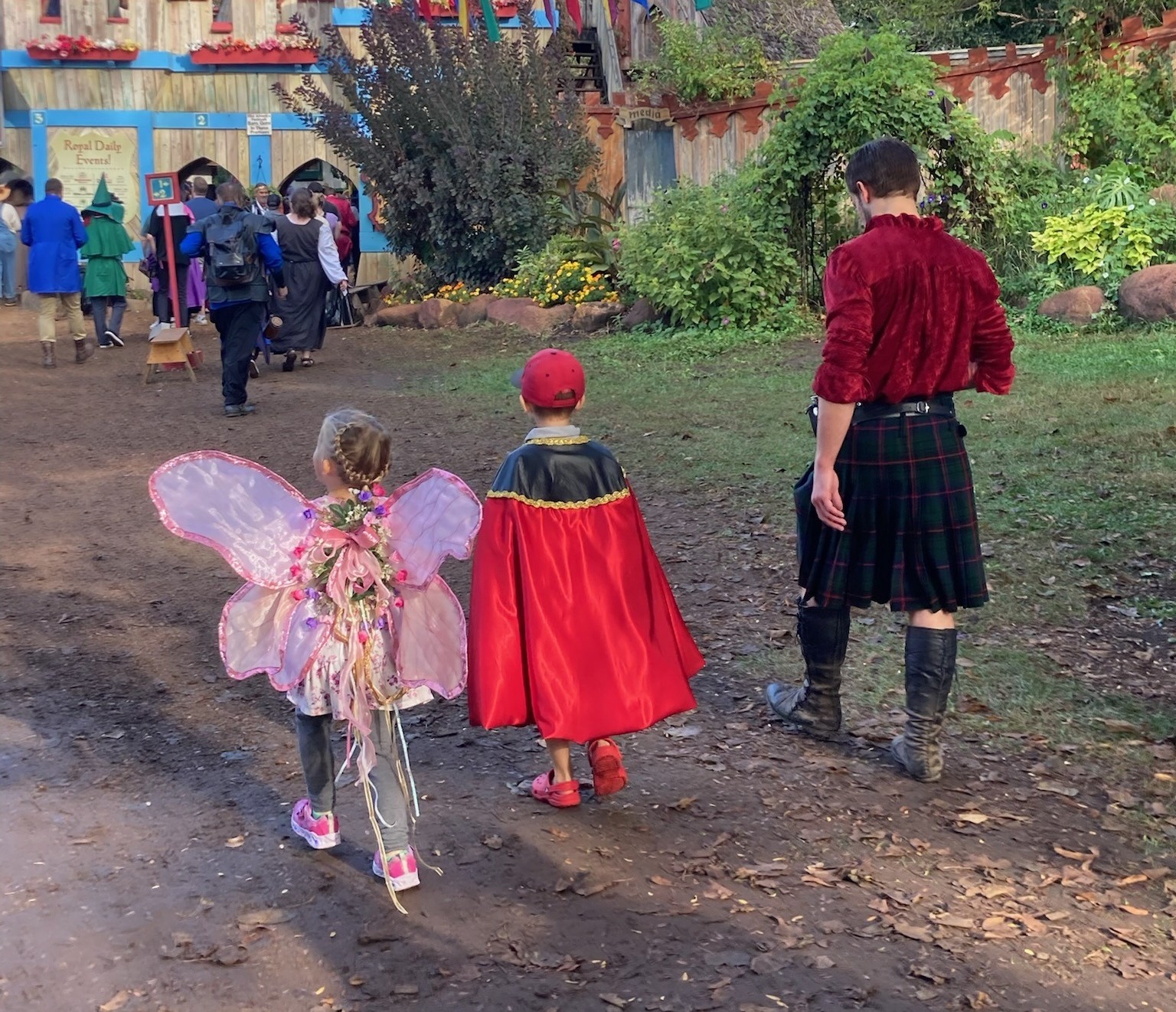
Image credit: me
In non-costume crafting, there are two noteworthy entries. One is a reversible vest that I made, largely because I wanted an excuse to use a gorgeous lilac satin-like fabric that was lying around. As with most elegant fabrics, it was a pain to work with. But, once again, worth every bit of struggle. And blood. I don’t really consider a craft project complete until I’ve bled on it at least once.
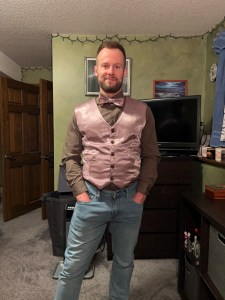
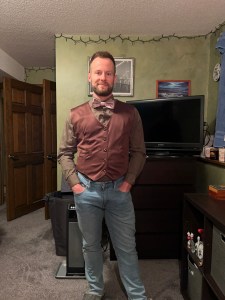
Image credit: me (both)
And finally, and the piece that reawakened my crafting hobby, I made a blanket out of t-shirts from the musicals I was in during high school (plus some community shows and a paid gig, because I had the shirts and I wanted a big enough blanket). This project started during the COVID lockdowns, but I never got further than cutting the t-shirts; I didn’t yet have a solid vision for how I wanted the final product to look. The shirts have the show name and art on the front and the names of cast, crew, and orchestra on the back, so I wanted to have the blanket be double-sided and would need to keep the front and back together. But, I wanted something thicker and cozier than just two layers of jersey knit cotton. And I wanted something more challenging than just sewing the panels to an existing, blanket (or blanket-sized fleece). And I knew I didn’t want a true quilt. I was stuck. For years. Finally, almost four years after the COVID lockdowns, I got inspiration: ribbon. I could sew panels to opposite sides of fleece squares, which would keep the front and back together while providing more thickness. Then I could sew these layered squares together, using ribbon to cover the seams and create clean borders and a consistent framing across an otherwise inconsistently-colored blanket. It was worth the almost four-year wait for that idea to come.
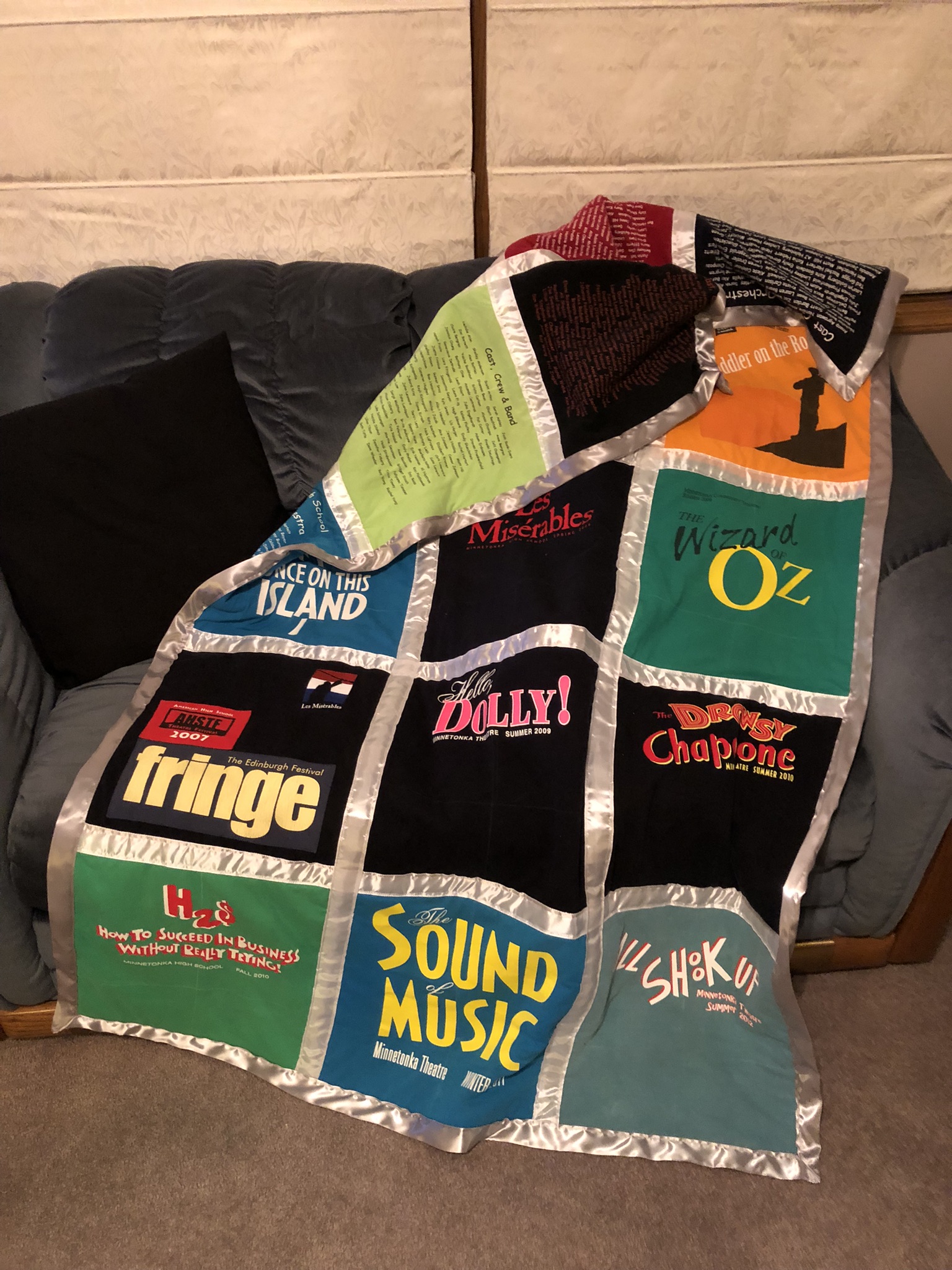
Image credit: me
Two other hobbies—okay, more so traditions—that I enjoy but that are less creative are baking boozy Frensh silk pie variations for Pi Day and carving intricate, 3D pumpkins for Halloween. I don’t consider these very creative endeavors, though. The pies only involve tweaking the flavor profile of the same base recipe, but that does require some inspiration and careful consideration. And I have started to get more creative with the decoration. The pumpkins, however, merely involve taking existing 2D images and translating them into 3D carvings. At least for me, it’s an exercise in meticulous copying rather than a creative or artistic endeavor. But, I have had to get a little creative with some aspects, like using ketchup for the blood in the 007 pumpkin and trying to color the lightsabers in the Mustafar duel one. All that to say, I suppose there’s enough creativity to warrant sharing them here. And I am proud of them, so as long as I’m doing shameless self-plugs, I might as well include these. Yes, I have shared collages of both my pumpkins and my pies before, but these ones are current, in (mostly) chronological order, and, for the pumpkins, include multiple images of the carvings that covered too much pumpkin to be captured in one photo.
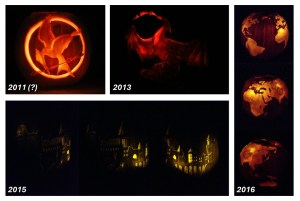
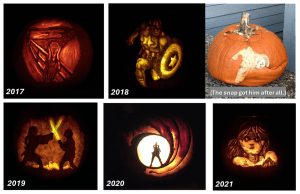
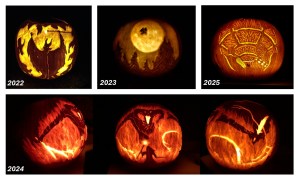
Image credit: me (all)
Pie Flavors
- 2020, Amaretto coconut: graham cracker crust with coconut flakes; amaretto in the chocolate silk filling; coconut extract and coconut flakes in the whipped cream topping
- 2021, Irish mocha: Oreo cookie crust; Kahlua in the chocolate silk filling; Irish cream liqueur in the whipped cream topping
- 2022, Ginger chai: gingersnap cookie crust, with some nutmeg and cinnamon; chai liqueur in the chocolate silk filling; Irish ream liqueur in the whipped cream topping
- 2023, Grasshopper: Oreo cookie crust; crème de menthe and mint extract in the chocolate silk filling; Irish cream liqueur in the whipped cream topping (yes, again; it really is that good!)
- 2024, Spicy Mexican chocolate: graham cracker crust; Fireball, cayenne powder, and chili powder in the chocolate silk filling; honey and cinnamon in the whipped cream topping
- 2025, Orange-amaretto-cardamom: amaretto-cardamom cookie crust (my own cookie recipe); triple sec, orange extract, and cardamom in the chocolate silk filling; amaretto and orange zest in the whipped cream topping
- 2026, Black Forest: Oreo cookie crust; Kirsh and cherry extract in the chocolate silk filling; amaretto in the whipped cream topping
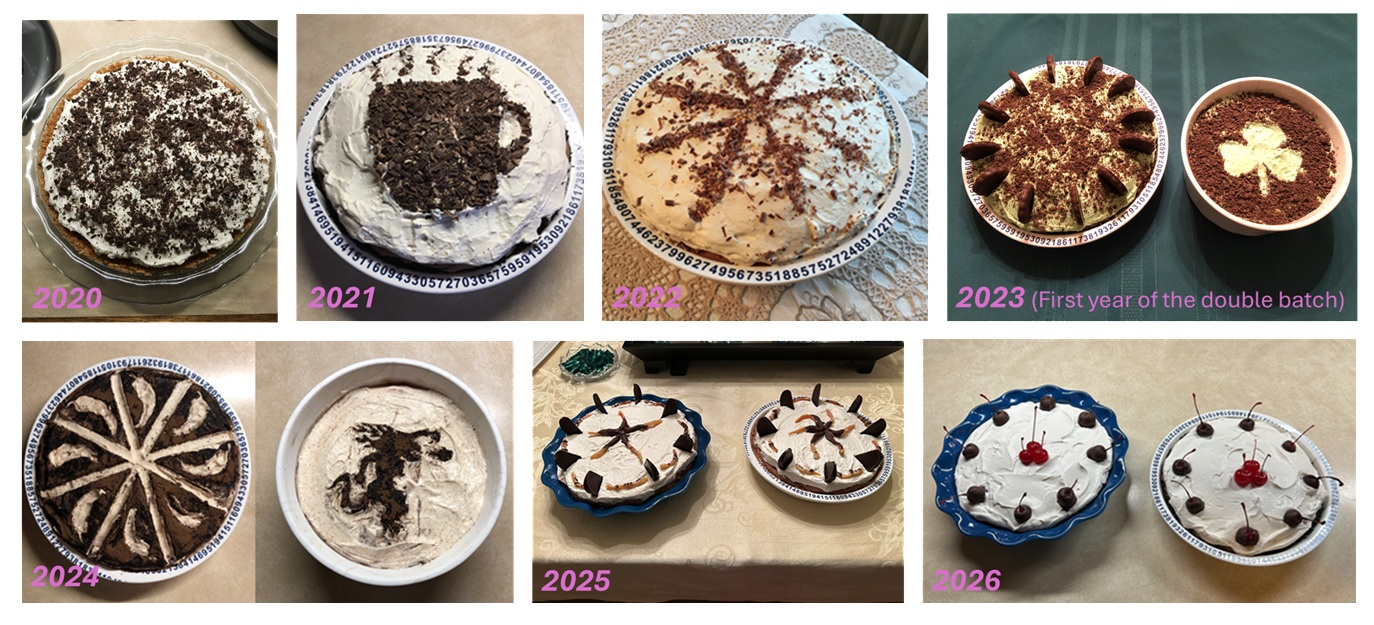
Image credit: me (all)
Your Turn
Now, my fellow image bearers, please share your creations. Feel free to drop pictures or videos in the comments; or share a link to your Etsy shop, author page, Spotify page, YouTube channel, etc.; or whatever other method is best for you to share what you’ve been working on. Let’s inspire each other! Plus, it’s meant to be shared and enjoyed!
Yours truly,
D. R. Meriwether, Ph.D.
Renaissance Man and Abundant Life Liver

