A SMART Way to Smash Your Goals

Header image credit: me // Featured image credit: me

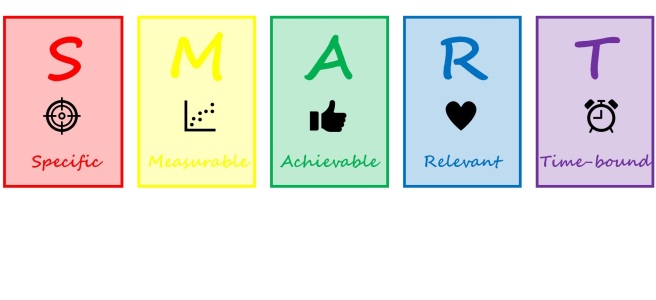
As cliché as it might be to write about goals in January, it’s also an appropriate time: with New Year’s resolutions on everyone’s minds, I might as well write about how to be more effective—that is, how to be SMARTer—about making those goals and with sticking to them. Among other tricks and techniques, one simple way to be more effective in your resolutions is to make them into SMART goals.

Continue reading

Happiness through Mindlessness

Header image credit: me // Featured image credit: me

Following up on my last post’s discussion about happiness and mindfulness, I want to talk a little bit about something that’s similar, yet almost the inverse: flow. The experience of flow is still very much an experience of being in the present, but it involves being so fully absorbed by and engaged with what you’re working on that the associated feeling of well-being derives less from an active practice of mindfulness and almost more from a present mindlessness.

Continue reading

Mindfulness for Mind Fullness

Header image credit: me // Featured image credit: Keegan Houser (freely available via Unsplash)

Mindfulness. It’s a word that’s been thrown out a lot in recent years. But what exactly is it? What does it entail? What does it do? Why is it so popular? Is it just another fad, popular now, only to fall off when we realize there’s actually nothing to it. If you just want quick, to-the-point answers, here you go, in order: a practice that can be trained; potentially many different things; great things for mental and physical health; likely due to the fact that it works; and no. If you want more detailed answers, read on.

Continue reading

Great Expectations: The Fact and the Fiction (But Not the Fictional Novel, Sorry)

Header image credit: me // Featured image credit: me

Thomas Edison. One of the world’s most recognized and renowned inventors. Also, supposedly, addled as a child. While tales of the incident have been exaggerated, as Snopes reports, as a boy, Edison had overheard a teacher describe him as addled and not worth keeping in school. Upon hearing of the incident, his mother (and apparently his greatest champion) angrily told off the teacher, telling him that her son had more brains than he did. Young Edison’s response was a resolved determination to “be worthy of her and show her that her confidence was not misplaced.”

That’s the power of positive expectations.

Continue reading

Free Will: Is It Real Life? Is It Just Fantasy?

Header image credit: me // Featured image credit: Jr Korpa (freely available via Unsplash)

It’s been in the back of my mind to write this post for a while, but I had been putting it off. But as I was walking out of the gym the other day thinking about my class choreography, I realized how relevant this topic is to so many things, so it’s time for it. I was thinking about the strength training class I teach and how much I love the section where we work back (deadlifts, rows, flyes, etc.). It has become my favorite section of that class, in large part because I always play a Journey song. Then I began to realize how that has helped me—no, caused me—to enjoy Journey more (not that I didn’t enjoy them before, but I’ve been getting into them much more since I started teaching this format), and also how I really started to enjoy the back section more once I began to make a big deal about making it my thing to always use a Journey song. In short, I had a profound yet mundane epiphany: did I choose to start liking that section of class (or Journey) more? Or was this increased fondness somehow destined by my previous actions and decisions?

Continue reading

Physical Fitness for Psychical Fitness: The Mental Benefits of Exercise

Header image credit: me // Featured image credit: me

Age-related cognitive decline is pretty much inevitable, especially now that people are generally living longer. While this decline in fluid intelligence (reasoning abilities) is complemented by an increase in crystallized intelligence (factual knowledge; see figure below), fluid intelligence helps us deal with many aspects of our daily lives (such as processing new information and solving problems), so it’s worth preventing its decline as much as possible. Thankfully, there are ways to do this. Continual learning and mental engagement (i.e., effortful mental engagement, not simple passive learning) are excellent ways to keep one’s mind sharp. But, perhaps one of the best ways is by doing something that also benefits us in other ways: exercise.

Continue reading

Logic 101: A Primer in Logic (or, How to Be Logical in an Increasingly Illogical World)

Header image credit: me // Featured image credit: me

It was a while ago now that I first read this Huffington Post article by C. Robert Gibson about the success of Governor Dayton’s economic policies, but I still remember how much the final paragraph incensed me. And it still does. But it’s not for the reason you might expect, namely, economic/political stance. (Quite frankly, I don’t know enough about economics, nor do I follow politics/current events enough to have a strong opinion on this matter either way; so, for all I know, the facts are correct and the conclusions—save the conclusion in the last paragraph—are valid and accurate.) Rather, it’s for reasons of logical reasoning. I’m not saying that his final point is wrong, or that his premises/facts are wrong, but that his logic is wrong: the conclusion, as he phrases its, simply cannot be derived from the premises he presents. There is a critical failure of logic in that final conclusion, and I feel that such logical failings (the cynic in me says that some are intentionally faulty so as to be misleading) are becoming more and more prevalent nowadays. So I wanted to address this issue head on so that we can all be better prepared to not be misled by faulty logic, whether accidental or intentional.

Continue reading

Easy Come, Easy Go: The Surprising Paradox of Task-Switching

Header image credit: me // Featured image credit: Jonathan Farber (freely available via Unsplash)

What do pit orchestra and my dissertation have in common? Well, aside from the fact that I maybe read some relevant articles during the occasional rehearsal and/or show (or, more often the case, discovered that articles weren’t as relevant as I thought they might be), almost nothing…aside from one thing: task-switching. As a reed player, I have doubled for most of the shows I’ve done, meaning I play multiple instruments, usually in the clarinet and/or saxophone families, though I have done some flute (not my forte—but not my piano either). Though still playing music, when switching between instruments, I’m essentially switching between tasks (at least as psychologists would define task-switching), because I’m alternatingly applying different sets of rules (i.e., fingerings). When doing this, rules will inevitably be misapplied (i.e., I play the wrong note).

Continue reading

What Giving Thanks Gives You

Header image credit: me // Featured image credit: me

“Watch your thoughts, for they become words; watch your words, for they become actions; watch your actions, for they become habits; watch your habits, for they become your character; watch your character, for it becomes your destiny.”
Various/Unknown

Apparently, versions of this quote have been attributed to various people, from Lao Tzu to Buddha to Emerson, but that’s beside the point; I share it not to start a debate over who said it first, but to highlight the power of thought. As psychological research (particularly the field of positive psychology) shows us, our thoughts can exert a noticeable—even a substantial or powerful—effect on our lives, for better or worse, depending on the nature of the thought pattern: more negative thoughts are associated with more negative effects; more positive thoughts are associated with more positive effects. So, in the spirit of positivity, let’s focus on the positive and how to improve overall feelings and well-being. And since we just had Thanksgiving, I want to focus on a specific kind of positive thought, one that Cicero once called the parent of all virtues: gratitude. Let’s explore what makes it so virtuous—and powerful.

Continue reading

Shower Power: Demystifying the Experience of Shower Thoughts

Header image credit: me // Featured image credit: me

Ironically, I did not think of the idea for this post in the shower. Instead, it happened during a conversation I had. I was talking with a woman, and near the end of the conversation, I mentioned how I process and think through things really well in the shower. She mentioned that she was the same way, and I think we were both delighted to hear that we weren’t alone in that. And, more than that, I’d wager that it’s actually a pretty common—and, let’s be honest, a pretty delightful—experience. And I think there are some valid psychological reasons for why. Here goes.

Continue reading