

Header image credit: me // Featured image credit: me
Ironically, I did not think of the idea for this post in the shower. Instead, it happened during a conversation I had. I was talking with a woman, and near the end of the conversation, I mentioned how I process and think through things really well in the shower. She mentioned that she was the same way, and I think we were both delighted to hear that we weren’t alone in that. And, more than that, I’d wager that it’s actually a pretty common—and, let’s be honest, a pretty delightful—experience. And I think there are some valid psychological reasons for why. Here goes.
Relaxed Mindlessness
This Mental Floss article, along with others, does a great job of describing a key factors contributing to showering’s potent effect on stimulating good thinking: mindlessness and relaxation. A shower is a very easy, automatic task; it doesn’t require much mental effort. This kind of mindlessness allows your brain to wander, to let loose; this enables it to more easily make connections between ideas and bits of knowledge stored in it without your having to direct the topic or flow of your thoughts—which means more potential for “Eureka!” moments. Relaxation arguably helps facilitate this kind of mindless, fluid thinking; but relaxation, particularly when it comes from something pleasurable (like a shower), has unique effects, even at the level of neurotransmitters.
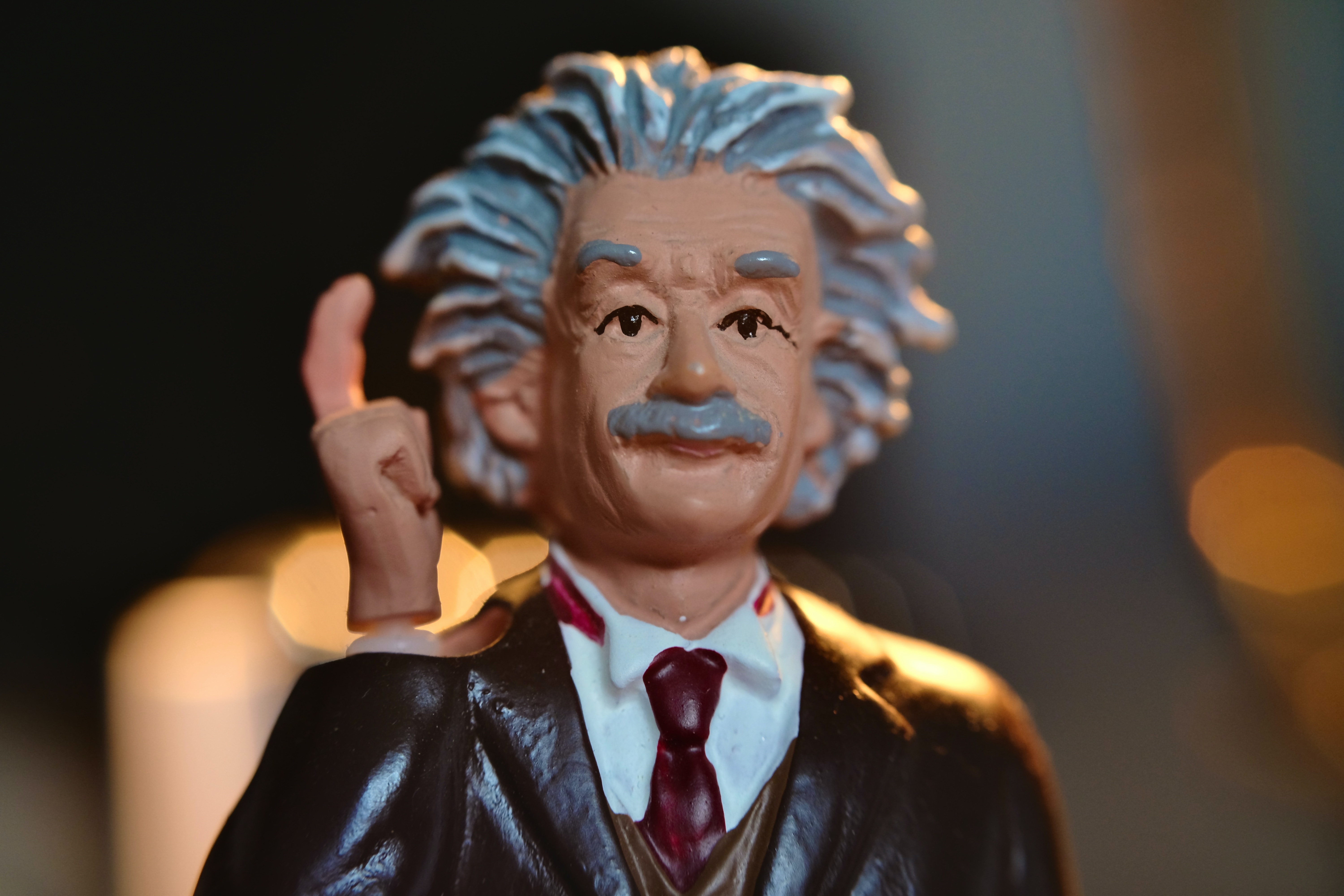
Image credit: Andrew George (freely available via Unsplash)
Dopamine is the neurotransmitter most closely associated with experiencing pleasure, so, if you enjoy your wonderfully warm shower, you can expect some dopamine to be released. But dopamine is also associated with what psychologists call executive function. Executive functions include processes like inhibiting distracting information to help you stay focused on a particular task, keeping track of the rules necessary for accomplishing that task, monitoring you progress on the task, and more. Basically, executive functions are what enable us to accomplish tasks and achieve goals. The central executive (the anthropomorphic term for the part of our brain responsible for carrying out executive functions) loves to plan, organize, and be in control. In fact, it sometimes likes being in control too much, to the point that it might stifle your creative thoughts. When highly engaged, it can filter our nearly every idea that is not relevant to the task at hand, deeming it unimportant; thus, that brilliant “Eureka!” moment you were about to have was shot down by a brain that realized that thought wasn’t helping you navigate traffic, for example.
Enter dopamine.
Dopamine kind of shakes up the central executive, having a complex relationship with executive functioning, as reviewed here: too little or too much dopamine and executive functioning is impaired. So, if enough dopamine is released, it might start quieting that nay-saying voice of the central executive, paving way for those creative thoughts.
However, we also need executive functioning when it comes to creativity. We don’t want to shut out new ideas, but we do want to make sure those ideas are relevant and effective. A light touch of the central executive can give just enough of such guidance. It has been shown that performance on a creativity task is associated with activity in the dorsolateral prefrontal cortex (dlPFC), the area where the central executive is considered to be housed. (Or should I say “officed”? Get it? Because executives work in offices… You’re welcome. And I’m not sorry. I never apologize for puns.) It seems that the rationale and guidance that the dlPFC is able to bring to the problem helps ensure that the ideas generated are relevant to solving said problem.
Relatedly, this TED talk (particularly between 7 and 8 minutes, though the whole video is worth a watch; it’s one of my favorites) mentions the role of the prefrontal cortex (PFC) in musical improvisation. While reduced activity of the dlPFC was observed during improvised jazz solos, activity increased in the nearby medial PFC, an area which is also affected by dopamine. So, it just may be that the physiology of shower time is similar: decreased activity of the dlPFC (the central executive) and increased activity of medial PFC (the central artist—can I unwarrantedly coin that term? I don’t know enough about all that it does, but it seems to be involved in creativity, so it’s at least somewhat artistic, if not the central artist).
Embodied Cognition
All of this is certainly likely to play a big role in why the shower is such an effective place for good thinking, but I believe there is another key factor that was not addressed in these other articles I found on the topic. I don’t know about you, but I rarely have as many good ideas when I’m just sitting somewhere and contemplating things. No. Those good ideas come in the shower, or when I’m running, or, occasionally, when I’m driving (not in traffic, because then I’m too focused on my surroundings, but on long stretches of more open road). What do these situations have in common?
Motion.

Image credit: Robin Pierre (freely available via Unsplash)
The motion of the water falling on me. The motion of my feet against the trail. The motion of my car through space. But what does motion have to do with thinking? To answer that, we need to look to the theory of embodied cognition.
Embodied cognition has been increasingly catching on in the research world, both in terms of attention and support. Embodied cognition asserts that our ability to think about things is, at least to some degree, reliant upon our ability to perceive things; that is, the abstract is grounded in the concrete. For example, studies have shown that when we mentally image objects (i.e., in our mind’s eye, but without physically looking at the imagined object), our visual cortex—the part of our brain responsible for visual perception—is active. Imagination and perception overlap. And the same is true in other perceptual modalities (sound, spatial reasoning, etc.). This all shows that our higher-level cognitive functions (i.e., those that are more abstract, those that go beyond perception) are at least somewhat instantiated in and/or supported by our perceptual abilities and brain areas. In other words, how our bodies interact with the world affects how our minds think.
Taking this back to the connection between motion and thought, it makes sense that movement through physical space can inspire movement through cognitive space, and vice versa. This 2014 article by Opezzo and Schwartz shows exactly that: participants exhibited more creative problem solving when walking (or after having just walked) than when sitting. Somewhat relatedly, Hills and colleagues (2011) found that the way participants searched through visual space influenced the way they subsequently searched through lexical space, showing that space can influence our verbal thinking. Putting this all together, it can be reasonably argued that being in an environment associated with movement—whether the movement of your body through space, as with running or driving, or with the movement of something else through your space, as with the water in the shower—can influence an associated movement of our thoughts, thereby (or at least we can hope) leading to some epic “Eureka!” moments.
Application
So what’s the takeaway from all of this? Well, for those of you (like me) who love their deliciously long and warm showers, enjoy on, and may you be blessed with good thoughts. Then, more generally, when you feel you need to get some good ideas or process some things, follow these simple tips:
Get Relaxed
Find an environment that is comfortable—and pleasurable, too, to facilitate release of that seemingly crucial dopamine.

Image credit: Artem Beliaikin (freely available via Unsplash)
Get Mindless
Find an environment that is relatively quiet and/or do something that’s easy (or nothing at all) so that your mind is free to wander, not being too focused on the task at hand and not being distracted by the environment.
Get Moving
Find an environment that is moving and/or through which you will be moving, which can inspire greater fluidity and movement of thoughts.

Image credit: Dmitry Schemelev (freely available via Unsplash)
Here’s hoping you have some great thoughts! (And some great showers, too!)
Yours truly,
D. R. Meriwether, Ph.D.
Renaissance Man and Abundant Life Liver


4 thoughts on “Shower Power: Demystifying the Experience of Shower Thoughts”